

Quality home interiors don’t require premium materials everywhere. You can control costs by matching each board to its location, moisture exposure, and intended use, while giving proper attention to workmanship.
Civil Sundar’s approach puts material selection, installation, and budget together. The starting point is the job each material needs to do, whether it’s a dry bedroom wardrobe, a decorative TV unit, or storage below a sink.
Choose materials for the location
Interior work involves several material choices: solid wood, plywood, MDF, HDHMR, WPC, particle board, and pre-laminated boards. A familiar material isn’t automatically right for every application, and a newer material isn’t automatically a better replacement.
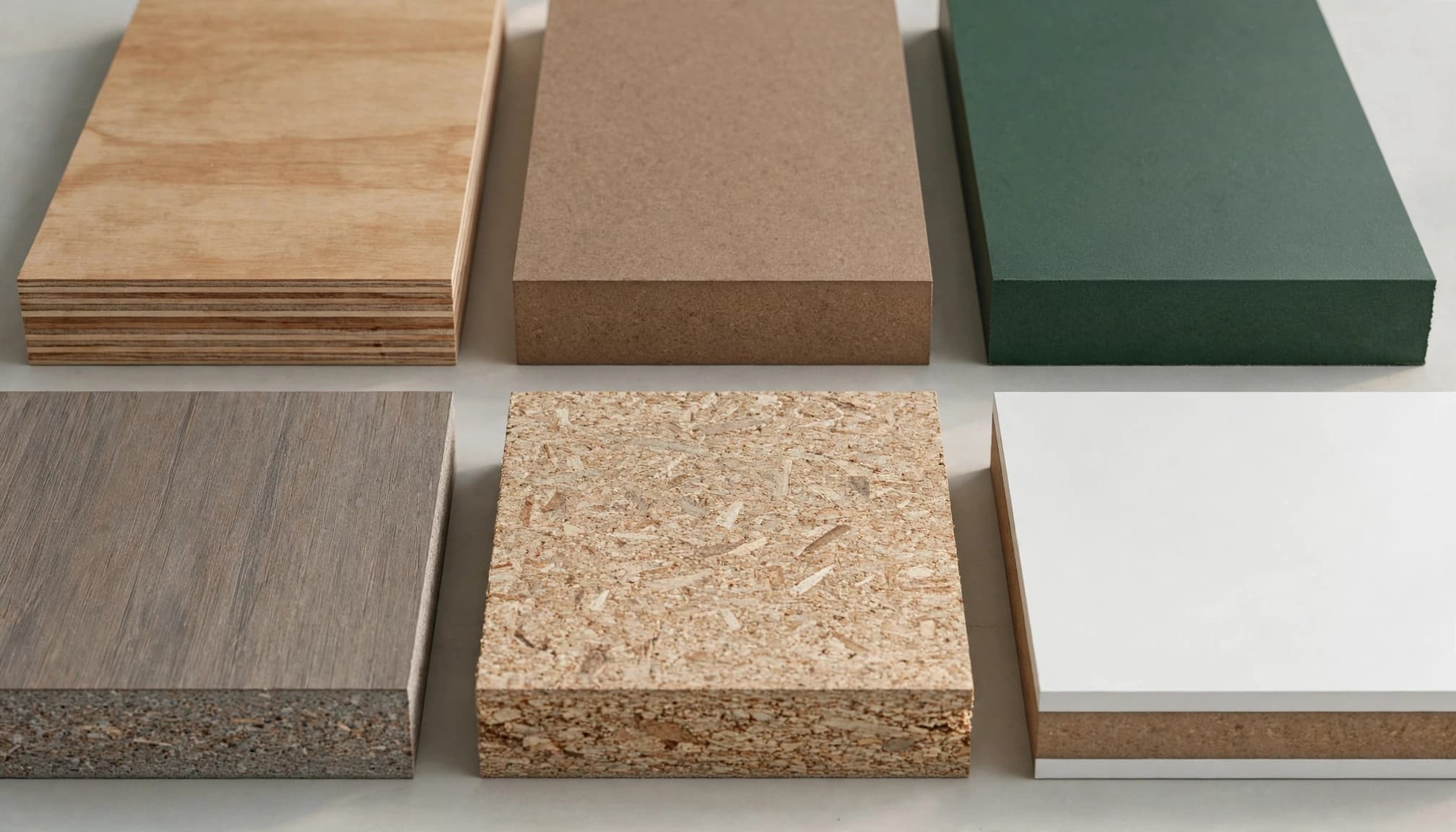
The practical difference is where and how each material will be used. A decorative panel in a dry bedroom has different requirements from a cabinet exposed to water near a kitchen sink.
Civil Sundar’s principle is straightforward: right material, right location, right workmanship, right budget. An experienced carpenter or contractor helps turn that selection into a workable interior, rather than treating one board as the answer for the whole house.
Plywood: Understand MR, BWR, and BWP
Plywood quotations often use abbreviations that sound similar but describe different moisture-resistance grades. These distinctions also appear in CenturyPly’s plywood grade comparison.
The three grades discussed are:
| Plywood grade | Meaning | Application discussed |
|---|---|---|
| MR | Moisture resistant | Mostly dry interior areas, including bedroom storage |
| BWR | Boiling water resistant | Suitable interior applications selected according to moisture conditions |
| BWP | Boiling waterproof | Water-exposed locations, including suitable sink-area applications |
The grade needs to match the exposure. Specifying BWP throughout a mostly dry bedroom can add expense without addressing a particular moisture problem.
At the same time, the abbreviation alone isn’t a complete specification. Brand, thickness, finish, and the proposed application also matter when comparing plywood quotations.
MDF and HDHMR have different roles
MDF for decorative work in dry areas
MDF means medium-density fiberboard. The applications discussed include routed or patterned surfaces, decorative shutters, TV-unit details, and paint-finish work in suitable dry areas.
Its role is tied closely to the design and finish. A decorative surface doesn’t necessarily need the same material as a cabinet in a moisture-exposed location.
HDHMR for suitable furniture applications
HDHMR refers to high-density, high-moisture-resistant board. Civil Sundar discusses it as an engineered-board option for selected wardrobe and TV-unit applications.
The exact product and its intended use matter when considering it as an alternative to plywood. Moisture resistance doesn’t make the entire finished unit waterproof; joints, edges, installation, and the conditions around the furniture remain part of the decision.
WPC and ready-finished boards
WPC is one of the options discussed for moisture-prone locations, including sink areas, utility areas, and storage exposed to moisture. The choice depends on the actual location and the product specified.
However, selecting a moisture-resistant board doesn’t resolve an active leak. Water-entry control and proper installation remain necessary around these units.
Particle board and pre-laminated board also appear among the available interior options. Pre-laminated boards offer a ready-finished surface and can support faster execution. That convenience still needs to fit the proposed application, finish, and budget.
These options don’t replace the need for a clear specification. The board used in one part of the house may differ from the board used elsewhere.
Match the board to each room
Bedroom wardrobes
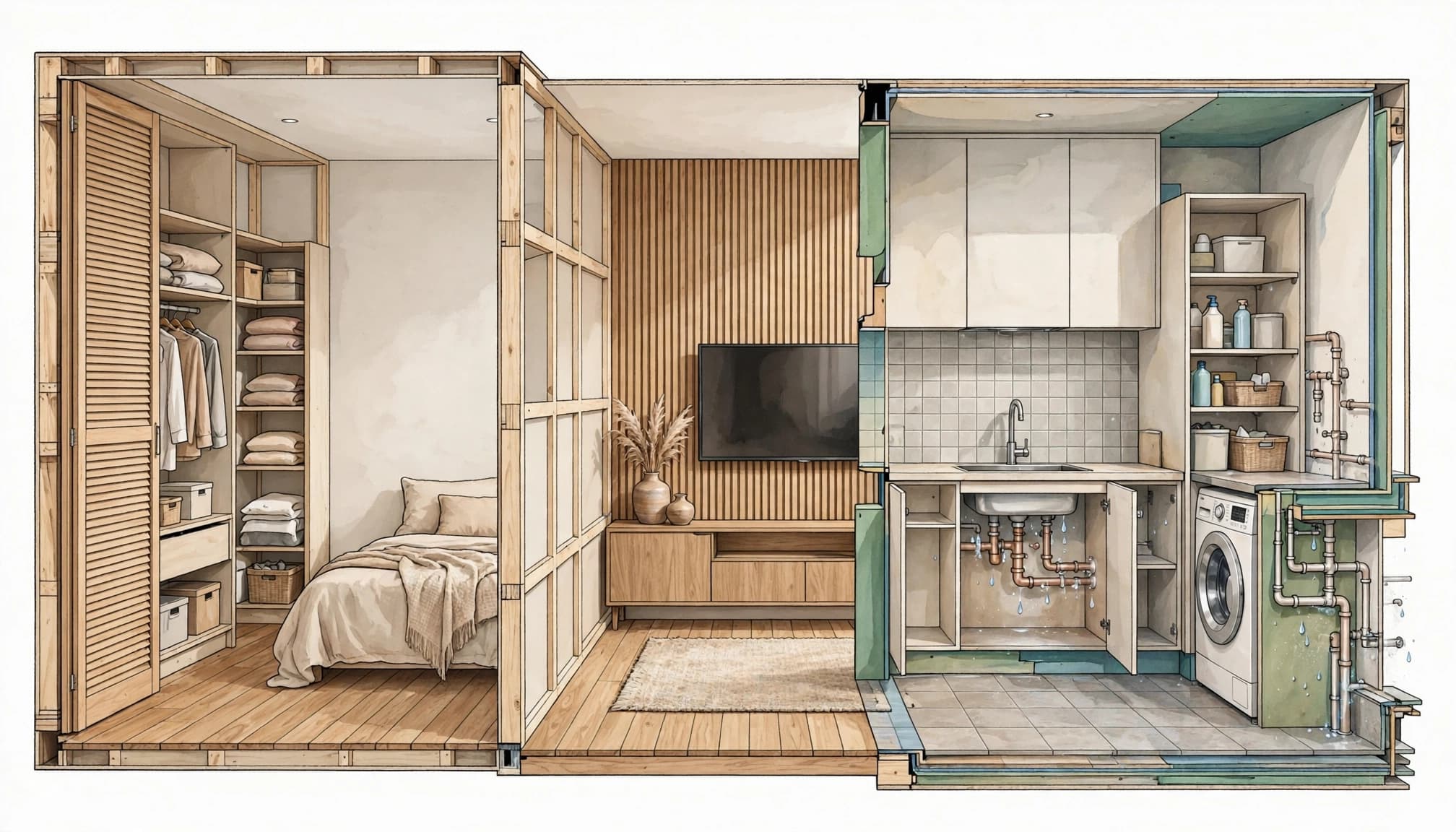
A bedroom is generally a dry area. The wardrobe discussion includes MR or BWR plywood and suitable HDHMR boards, with the final choice depending on the intended use, finish, and budget.
A full wardrobe doesn’t automatically need the most expensive waterproof material. Its shutters, hardware, and installation also affect the finished result.
TV units
MDF can suit decorative or patterned TV-unit surfaces in dry conditions. HDHMR and suitable plywood options also come into consideration according to the design and moisture conditions.
The board choice needs to work with the finish and the unit’s support requirements. Paying for an expensive waterproof board alone doesn’t resolve how the TV or surrounding furniture will be supported.
Kitchen sinks, bathrooms, and utility storage
Wet zones require more attention than a dry wardrobe area. BWP plywood and WPC are options raised for suitable water-exposed applications.
For sink, bathroom, or utility storage, material selection goes together with leakage control, edge sealing, and joint treatment. The exposure at the actual installation location determines the requirement.
Finishes and ceilings need their own specifications
Laminate, acrylic, and paint finishes
Laminate, acrylic, and paint finishes affect the appearance of the interior. Acrylic provides the glossy, premium look discussed for modern bedrooms and TV-wall features, while PU or other paint finishes are also part of the finish selection.
The finish and the underlying board are separate choices. A premium-looking surface doesn’t settle whether the board beneath it suits the location.
Civil Sundar also cautions against overdesigning a TV wall with too many details or unnecessary accessories. Those additions increase the scope and cost without always being needed for the intended appearance.
POP and gypsum false ceilings
The ceiling discussion includes POP and gypsum, with attention to moisture-resistant systems and proper joint treatment.
The distinction between moisture resistance and waterproofing matters here, too. Ceiling performance depends on the system and installation conditions, including how joints are treated and whether water-entry problems have been controlled.
Workmanship affects the value of every material
Good materials can still produce a poor interior when installation is weak. An experienced carpenter or contractor matters because the finished work depends on more than the board name.
The installation concerns raised include leak control, edge sealing, joint treatment, ventilation where appropriate, electrical safety, wet-area detailing, and structural support. Frequently used drawers and shutters also need suitable hardware and careful fitting.
A moisture-resistant board doesn’t make the whole unit waterproof. Edges, joints, leaks, and installation conditions still affect the result.
Hinges and other hardware deserve attention alongside the visible laminate or acrylic finish. These parts are used repeatedly, so their specification belongs in the same discussion as the board and surface finish.
Compare quotations beyond the total price
The Chennai market prices discussed for 2026 are indicative reference prices, not guaranteed rates. Actual costs vary with brand, grade, thickness, quantity, dealer, finish, GST, and transportation.
Two contractors’ totals aren’t directly comparable when they include different materials or different scopes of work. A useful quotation makes those differences visible.
The details to compare include:
- The material brand, grade, board thickness, and specification.
- The finish included, such as laminate, acrylic, or paint.
- The hinges and other hardware supplied.
- The installation work and workmanship included in the price.
- Whether GST and transportation are included.
A lower total may reflect a different board, finish, or hardware package. Likewise, a higher total needs to be understood through its specifications rather than treated as proof of better quality.
Cost savings come from selecting an appropriate material and avoiding unnecessary design additions. Electrical safety, waterproofing, wet-area detailing, structural support, hardware, and installation still need proper attention.
Quality depends on the complete interior specification
A dry bedroom wardrobe and a sink cabinet don’t need identical materials. The useful balance is appropriate material selection backed by sound installation and a quotation that clearly states what’s included.
Civil Sundar shares related construction guidance through the CivilSundar website. The principle remains consistent: premium materials belong where the application calls for them, and good workmanship matters throughout the home.
Leave a Reply