
Introduction
A strong foundation is the most important part of any building. It transfers the load of the structure safely to the ground and prevents settlement, cracks, and structural failure. Choosing the correct foundation type depends on soil condition, building load, groundwater level, and project budget.
What is a Foundation?
A foundation is the lowest part of a structure that distributes the building load to the soil. It provides stability and ensures the safety of the entire building.
Types of Foundations
1. Shallow Foundation
Shallow foundations are used when the soil near the ground surface has sufficient bearing capacity.

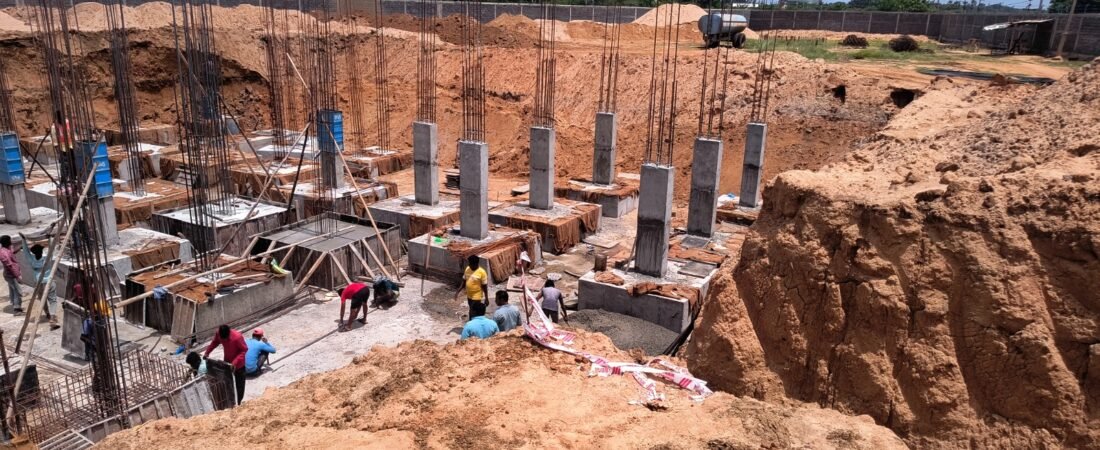
Isolated Footing
- Used for individual columns.
- Economical and easy to construct.
- Common in residential buildings.

Combined Footing
- Supports two or more columns.
- Used when columns are close together.
Strip Footing
- Used under load-bearing walls.
- Suitable for small residential structures.

2. Deep Foundation
Deep foundations are used when the upper soil layer is weak.
Pile Foundation
- Transfers loads to deeper strong soil layers.
- Suitable for high-rise buildings and bridges.
- Can withstand heavy loads.

Pier Foundation
- Constructed using large diameter cylindrical columns.
- Used where shallow foundations are not suitable.
Factors Affecting Foundation Selection
- Soil Bearing Capacity
- Type of Structure
- Groundwater Level
- Construction Cost
- Site Conditions
- Earthquake Considerations
Advantages of Proper Foundation Design
- Improves structural stability
- Reduces settlement
- Prevents cracks
- Increases building lifespan
- Enhances safety
Conclusion
The foundation is the backbone of any structure. Understanding different foundation types helps engineers and homeowners choose the most suitable option for safe and durable construction. Proper soil investigation and structural design are essential before selecting a foundation system.